
An Historic Ride through Scottish Glengarry
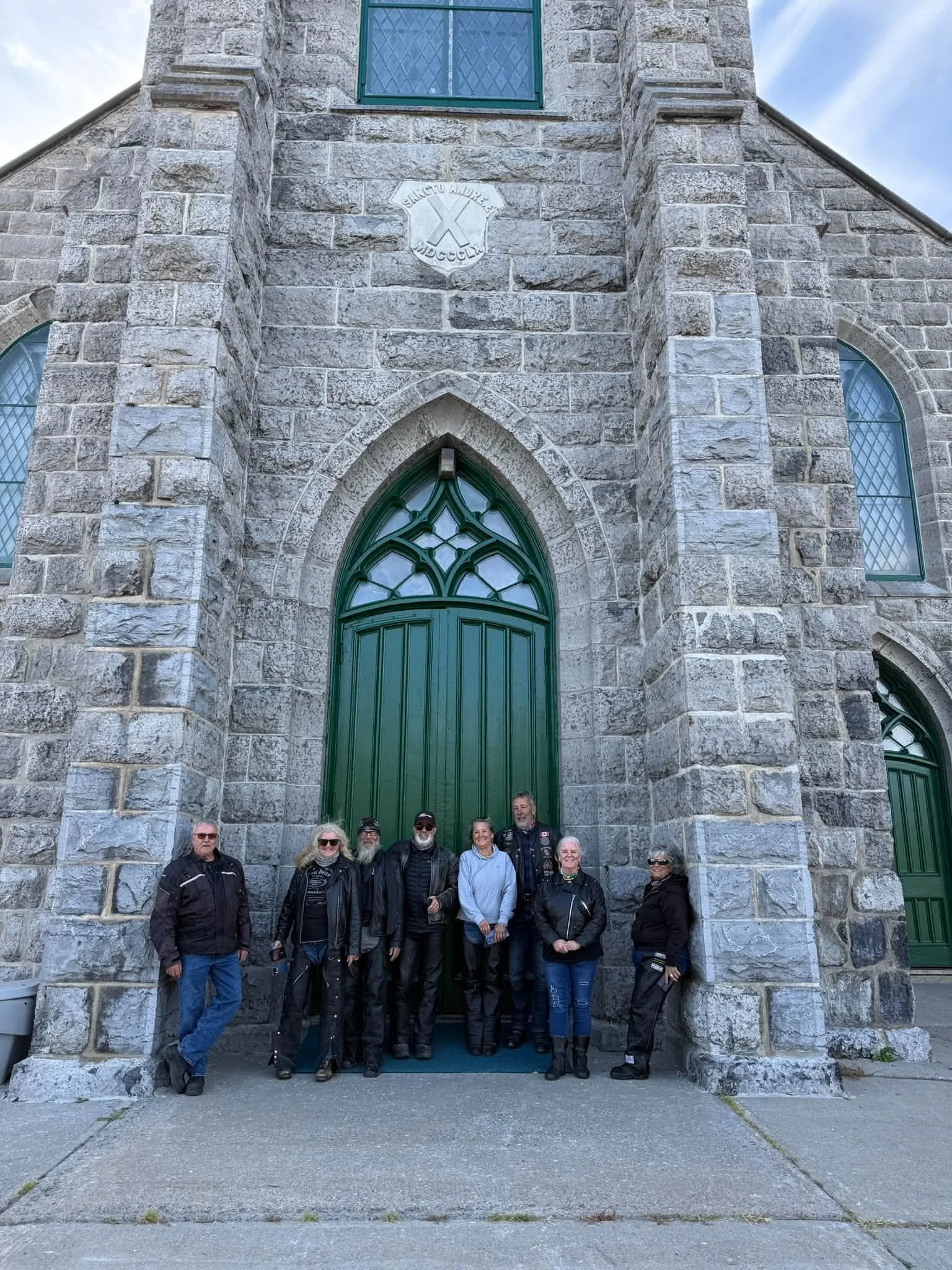
Our group in front of the Church in St. Andrew’s West, Authors Photo
By Dave Johnston
This past Saturday I lead a 160-km motorcycle ride of club members from the Old Bastards Vintage Motorcycle Club through historic Glengarry in Eastern Ontario. We followed the Stormont Dundas and Glengarry County Road 18 which winds through small hamlets and farm fields full of ripe corn, soybean and hay. We stopped at some of the historic locations which tell the story of Canada’s earliest Scottish settlement.
A Scottish Beginning
Glengarry was founded in 1784 by Scottish loyalists, mainly from Clan Donald, and other Highland Scottish emigrants from the Mohawk Valley in New York (NY) following the American Revolution. The Crown granted them land and helped with supplies the first winter, as compensation for their losses. Some veterans received land for their salaries. The settlement was founded to attract Scottish emigrants arriving after the Highland Clearances. Great Britain hoped the new immigrants would settle and develop this area, which became known as Upper Canada and later Ontario.
St Andrew’s West
Our first stop was in St. Andrews West where we toured the Pioneer cemetery and three historic parish churches. The parish, (named for the Patron Saint of Scotland) was founded in 1784 by 38 families of Scottish descent. These families (United Empire Loyalists) had travelled north from New York state and were granted land by the British Crown in return for their military service.
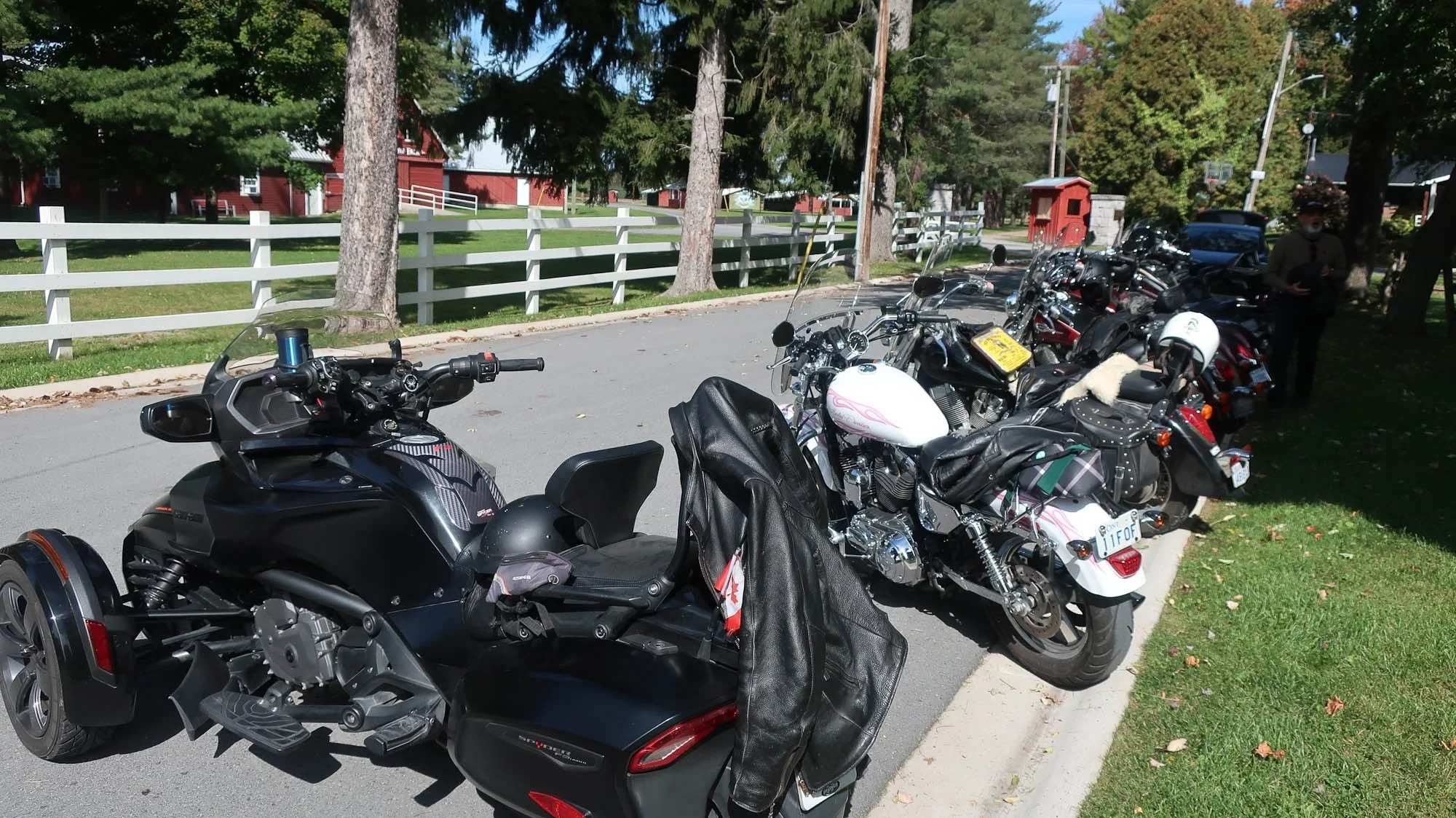
Our bikes at the Nor’Westers & Loyalists Pioneer Museum, Photo Author
Located on the site of the original log church, built in 1784, a replica was erected in 1991. One of the most famous people buried in this cemetery is Simon Fraser, the famed Scottish Nor’ Wester and explorer who charted much of British Columbia including the Fraser River.
The pioneer graveyard is also the burial site of Ontario’s First Premier John Sandfield MacDonald. The oldest tombstone, still legible is that of Alexander McDonell whose epitaph reads “killed by the falling of a tree” – 1799.
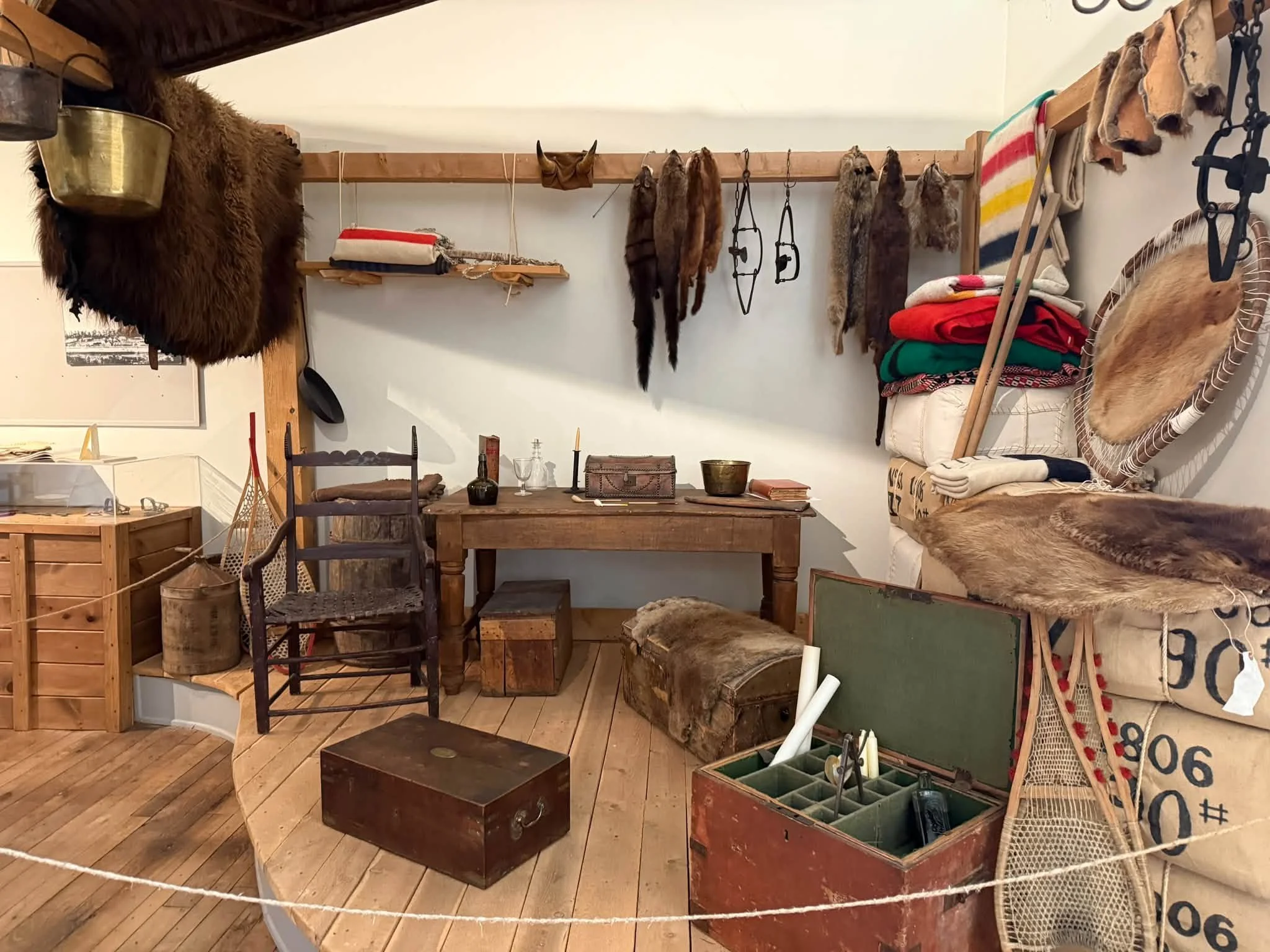
Nor’Wester & Loyalist Pioneer Museum display, Photo Author
Across the road from the cemetery is Quinn's Inn, built in 1865 by John Sandfield MacDonald. Two years before becoming Premier, MacDonald built a stagecoach stopover here. Located on what was once the main stagecoach route between Montreal, Kingston and Toronto known variously as the Line Road, the King's Road or Dundas Street. It was MacDonald's wish that the basement of the hotel be kept for use by the parishioners for serving lunches after wedding and funerals., and was purchased by William and Elizabeth Masterson in 1895, who renovated the interior. The building opened under their management as a store, barber's shop and post office a few years later. In 1924 Frank Quinn became owner, followed by his sons Maynard, Alfred and Ernest in 1948. It continued. Currently Quinn's Inn is owned and operated by the Belmore Family.
Martintown
Further east is Martintown, which has a historic grist mill, built in 1846 by Alexander McMartin. It replaced the original wooden grist, saw, and carding mills built between 1801 and 1803 by his father, Malcolm McMartin. In addition, McMartin served the community as Justice of the Peace, sheriff, Member of the Legislature and Lieutenant Colonel in the militia.
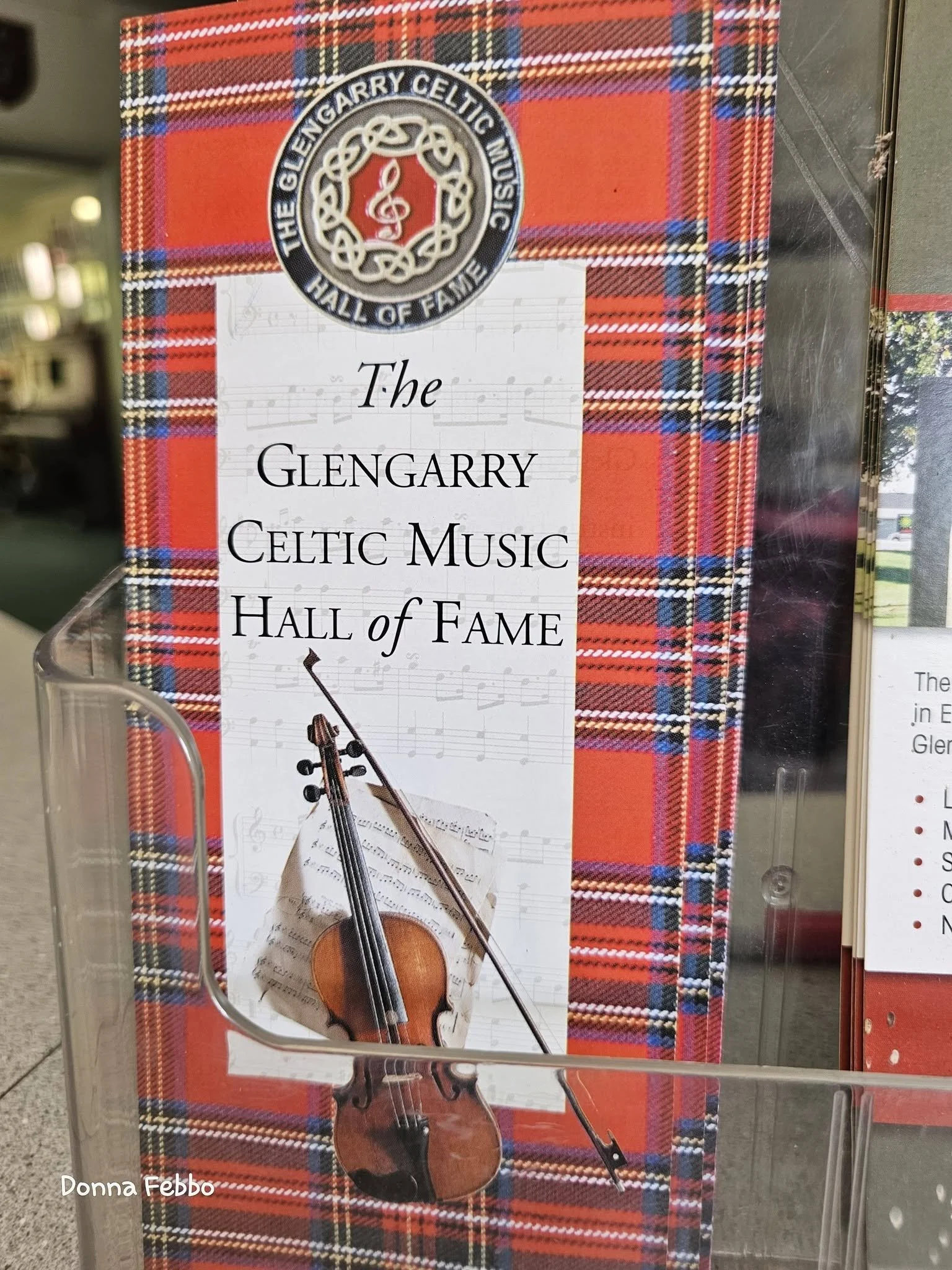
Glengarry Celtic Music Hall of Fame, Photo Donna Febbo
The milling industry on the Raisin River attracted settlers to the village and houses, a school, church, shops, taverns and a blacksmith were established. The village was originally called McMartin's Mills and later changed to Martintown.
Fraser’s Field
As we departed County Road 18 and headed south, on the North side of county road 14, which follows the Raisin River into Williamstown, is an obscure plaque at the entrance of an overgrown lane. It outlines the history of an estate named Fraser’s Field. The large, renovated farmhouse can be seen at the end of the 400-metre lane or from the adjacent county road 27.
Williamstown
Williamstown, though off the beaten track, is a treasure trove of history, including the Glengarry Nor’wester and Loyalist Museum, the Glengarry Celtic Music Hall of Fame, the John Johnson House (a National Historic Site), the Bethune Thompson House, and the St. Andrew’s United Church and Cemetery.
The museum chronicles the migration of Loyalists led by Sir John Johnson of the Mohawk Valley, NY, to the surrounding area during the American Revolution. It is in an old schoolhouse which features the names of previous students carved into the brick face.
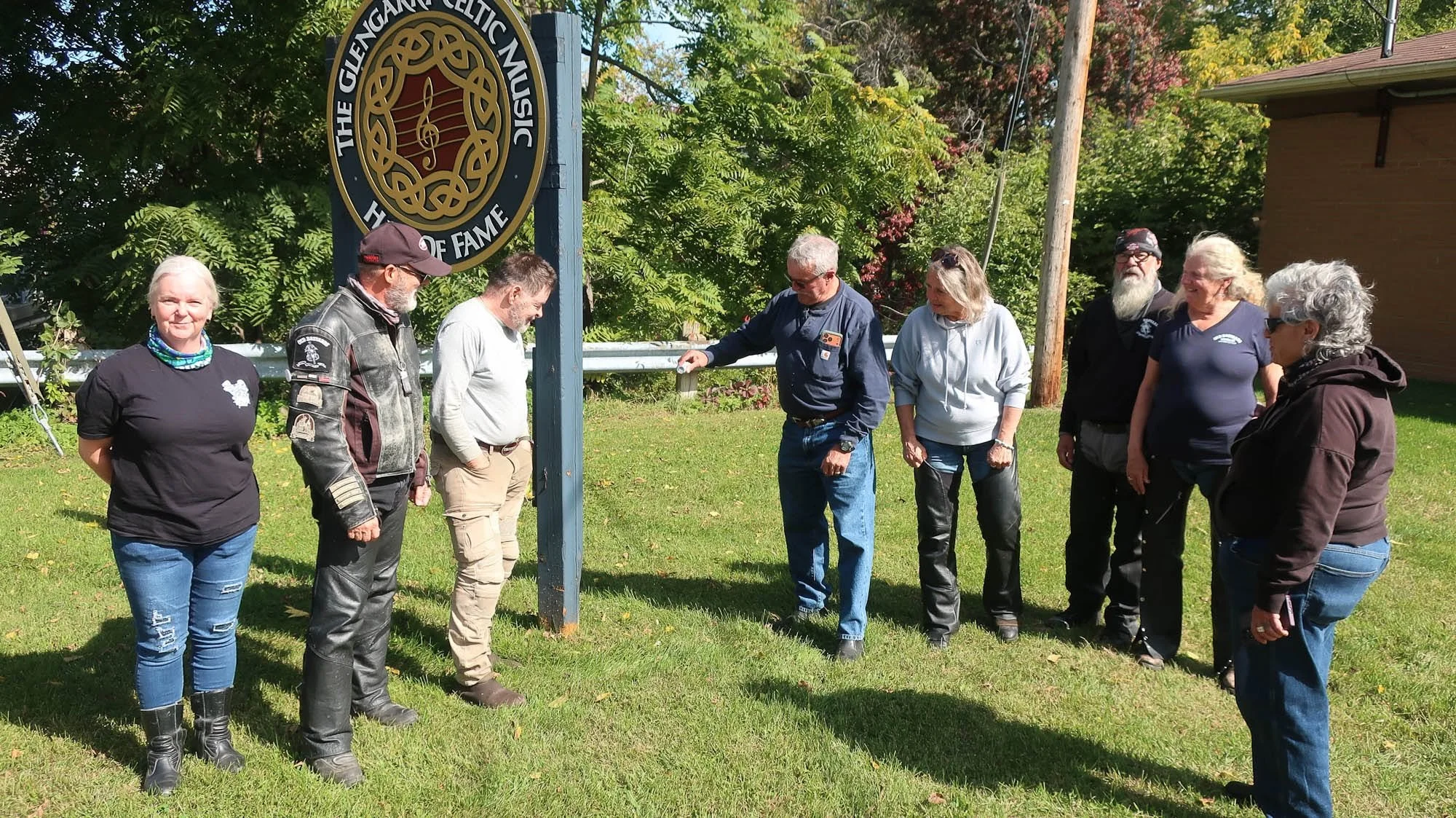
Dave Ross spreading his late father'‘s (the Reverend Bruce Ross) ashes on the grounds of the museum. Photo Ray Pilon
Glengarry County has a wealth of Celtic heritage. One thing lacking, however, was a form of recognition for those talented individuals who make up Glengarry’s rich Celtic music and dance culture. This void has been filled by the Glengarry Celtic Music Hall of Fame in Williamstown, founded on June 10th, 2003 in Alexandria, Ontario.
One of the riders, Dave Ross, told us his father, the reverend Bruce Ross, was a great fiddle player and is featured in the museum along with his bandmates. Dave’s father had passed earlier this summer, so he brought some of his ashes to spread on the grounds of the hall.
Sir John Johnson House
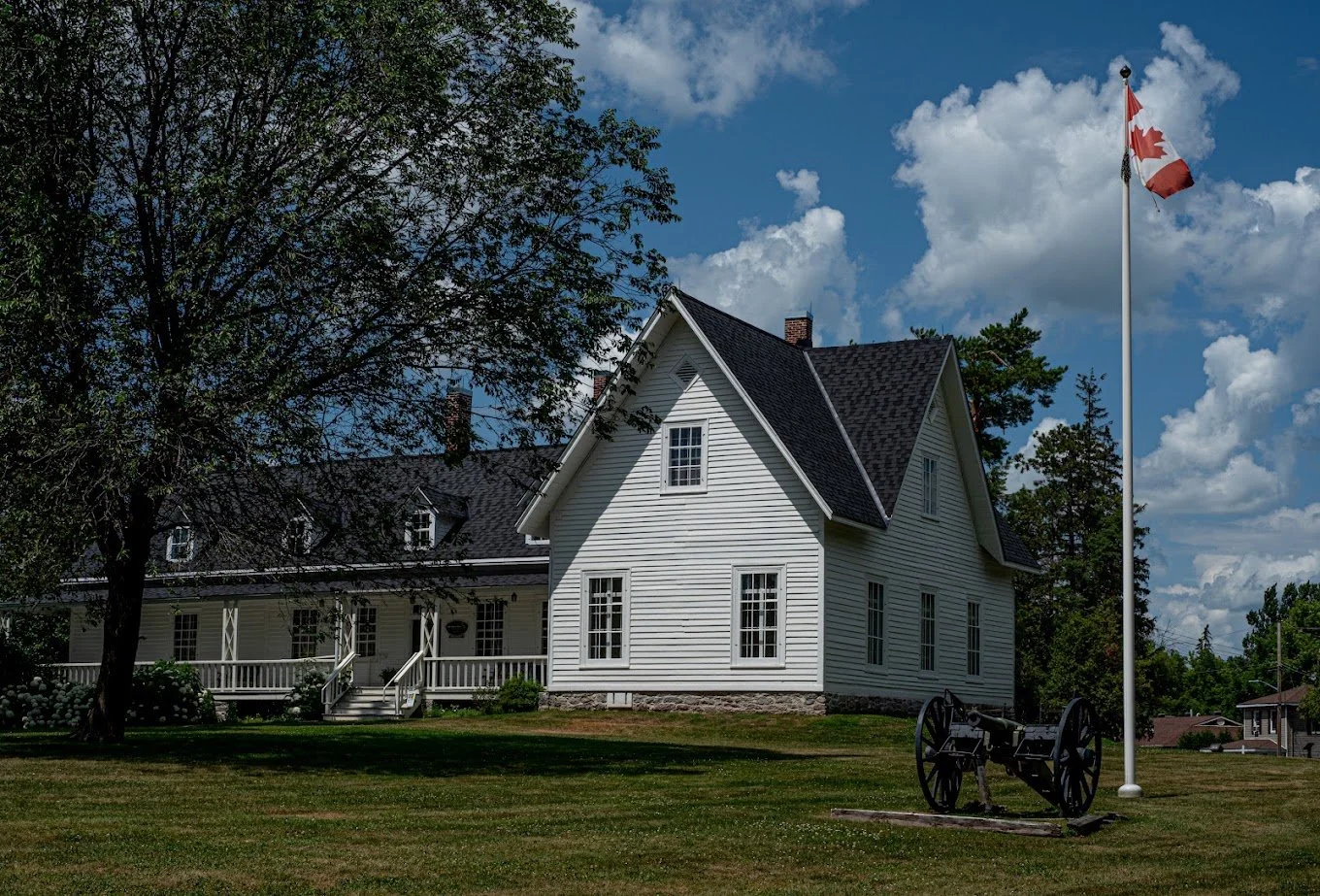
Sir John Johnson House, Photo Steven Downes
Sir John Johnson, a loyalist who moved north to Montreal following the American Revolution, left behind a large estate in Mohawk Valley to fund and lead the King’s Regiment of New York. In 1784 he was instrumental in resettling many loyalists in the area. Johnson himself built a home and mills on the banks of Raisin River between 1784 and 1792. The home remains one of the oldest in Ontario.
St. Andrew’s United Church.
Reverend John Bethune acquired a 3000-acre grant near Williamstown where he built the first Presbyterian church in Upper Canada. A Presbyterian congregation-built log church in 1787 that was replaced in 1806 by a stone structure. Its bell was presented in 1806 by Sir Alexander Mackenzie, the great western explorer, between 1787 and 1958 the congregation, astonishingly, was served by only six ministers.
Bethune-Thompson House / White House
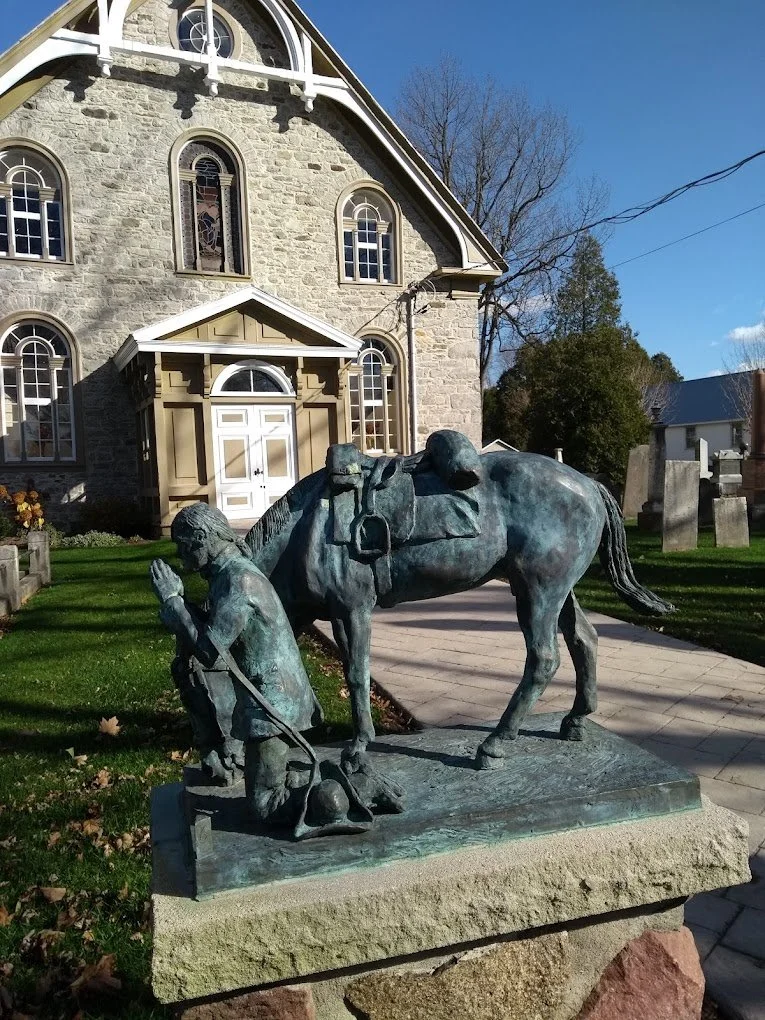
Statue of Loyalist Pioneer Praying in front of St Andrews United Church, Photo Barry Sullivan, 2023
This early Ontario home combines historic construction techniques and classic design and is designated a national historic site of Canada. The vertical log south wing may date from the 1780s when Loyalist Peter Ferguson settled on the site. The central part was built ca. 1805 as a manse for Rev. John Bethune, the first Presbyterian Minister of Upper Canada and was later the residence of explorer David Thompson.
St. Raphael’s Ruins
We drove north out of Williamstown and rejoined County Road 18 where we continued heading east until we came upon the ruins of the St. Raphael’s Catholic church. In 1970 a fire consumed the church, one of the earliest Roman Catholic ones in English-speaking Canada. Fortunately, the outer walls were spared and today its impressive scale and fine masonry work continue to attract tourists to the site. The Ruins were declared a National Historic Site in 1996.
Dunvegan and the War of 1812 Encampment
We continued north through Glen Roy, passing by Loch Garry until we reached our final stop of the ride, the Glengarry Pioneer Museum in Dunvegan. Opened in 1962, the museum consists of several nineteenth century log heritage buildings and artifacts. It was originally known as MacIntosh’s Store in the 1840s. It then became the Star Inn, a stagecoach stop in the 1860s. The inn is furnished to reflect the 1860s, including the original barroom, believed to be one of the oldest in Eastern Ontario.
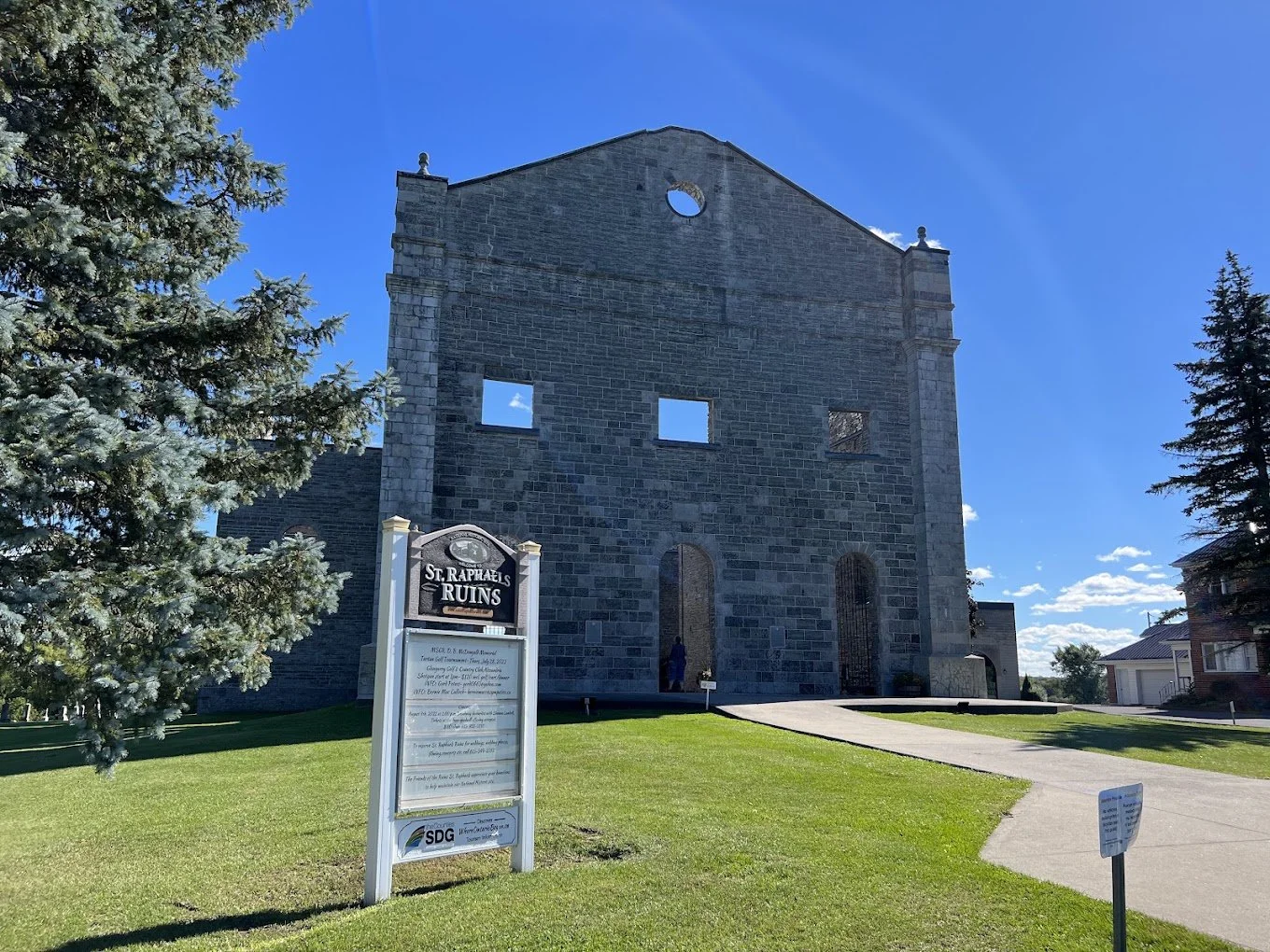
St. Raphaels Church Ruins, Photo Author
This weekend it was the site of a re-encasement, with costumed actors, of part of the War of 1812 encampment. This event featured the Glengarry Light Infantry Fencibles, a unit formed of local Scots during the War of 1812 and which saw action in several major engagements during the war.
Maxville Home of the Glengarry Highland Games
On our return route back to Delta, we passed through the small town of Maxville home to one of the largest highland games in North America: The Glengarry Highland Games are held each year in early August.
We covered 160 km, but somehow travelled much farther -- right into Glengarry’s Scottish beginnings! It was a really fun-packed day full of a sense of discovery and camaraderie.
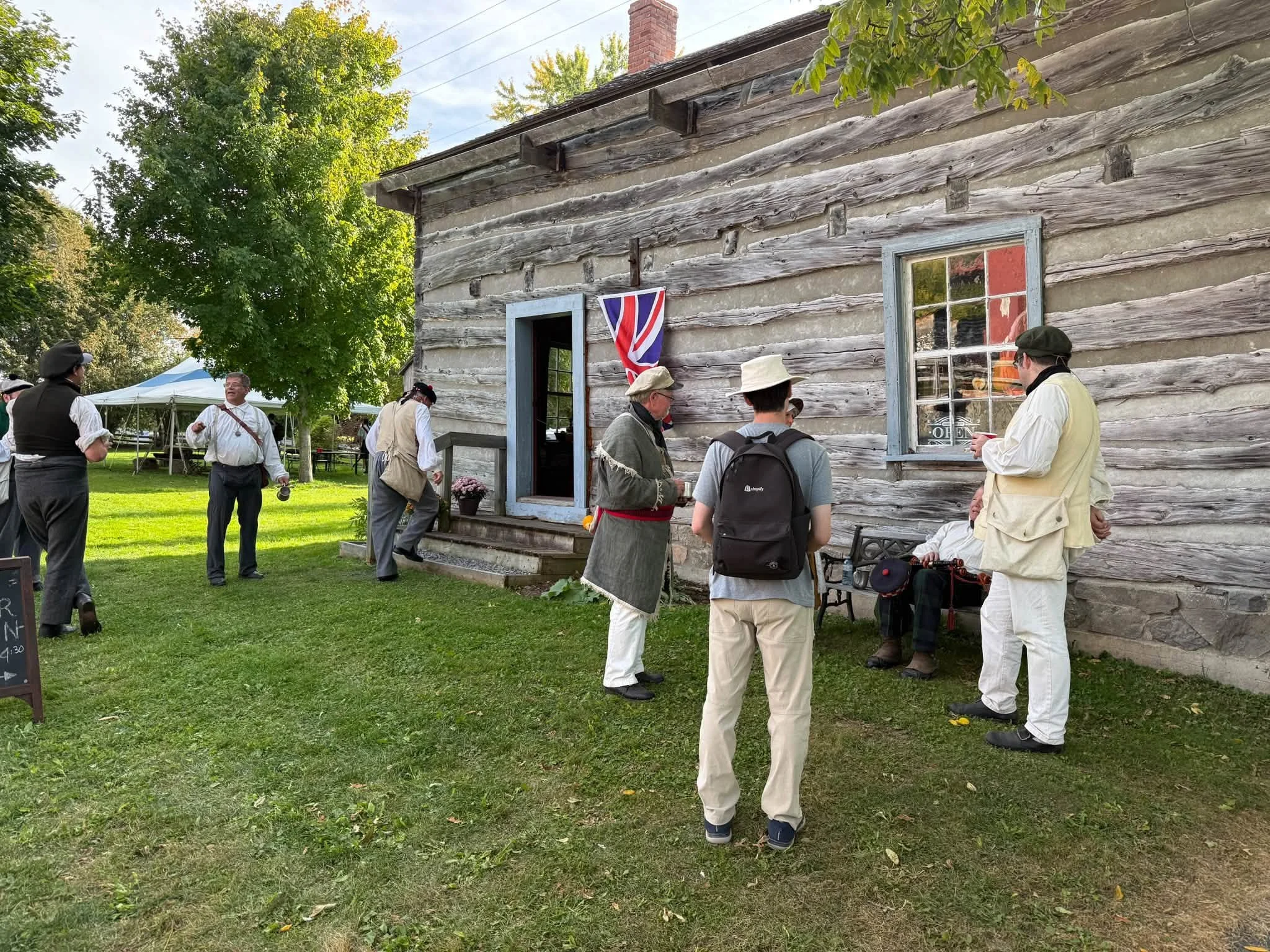
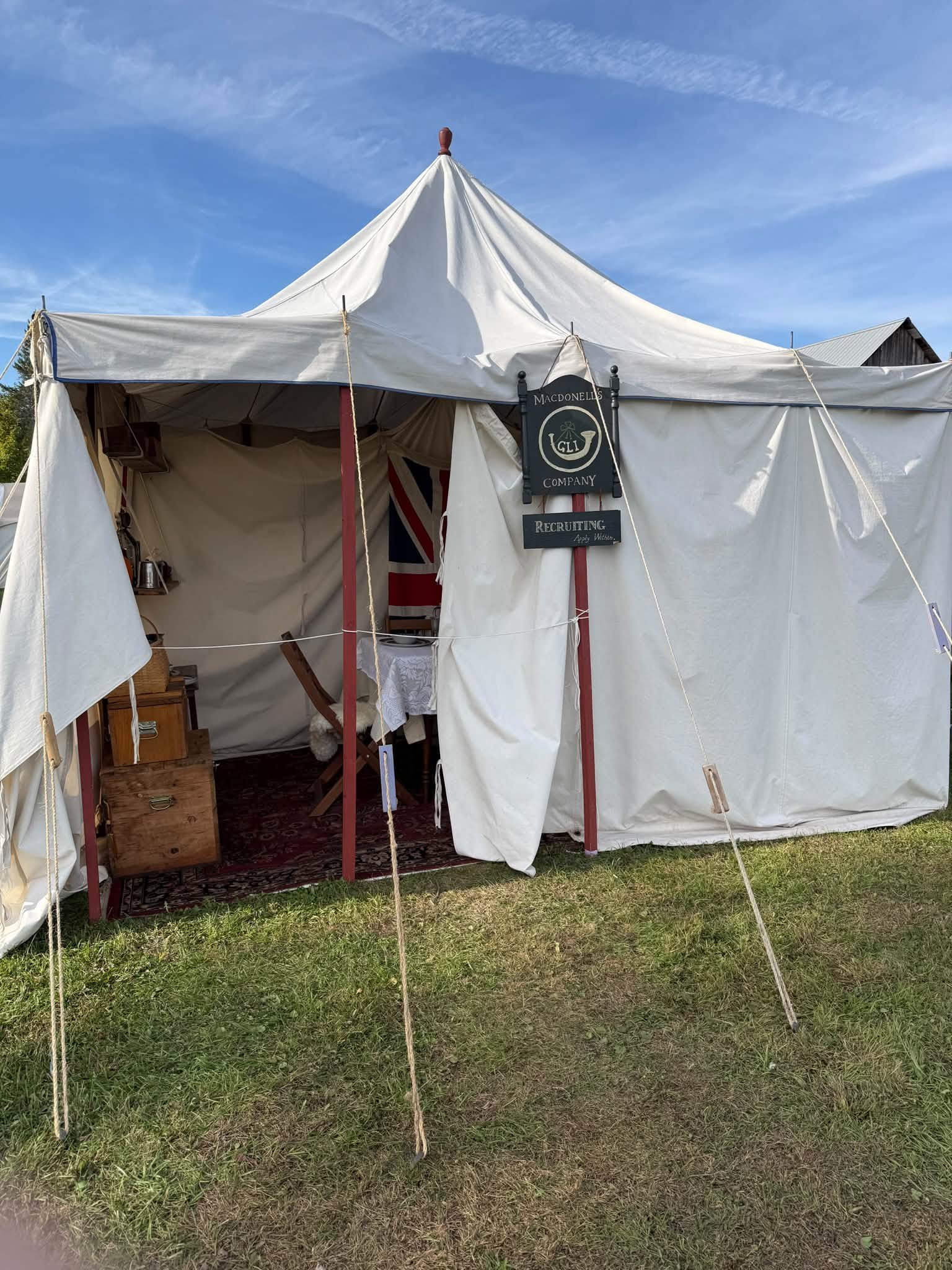
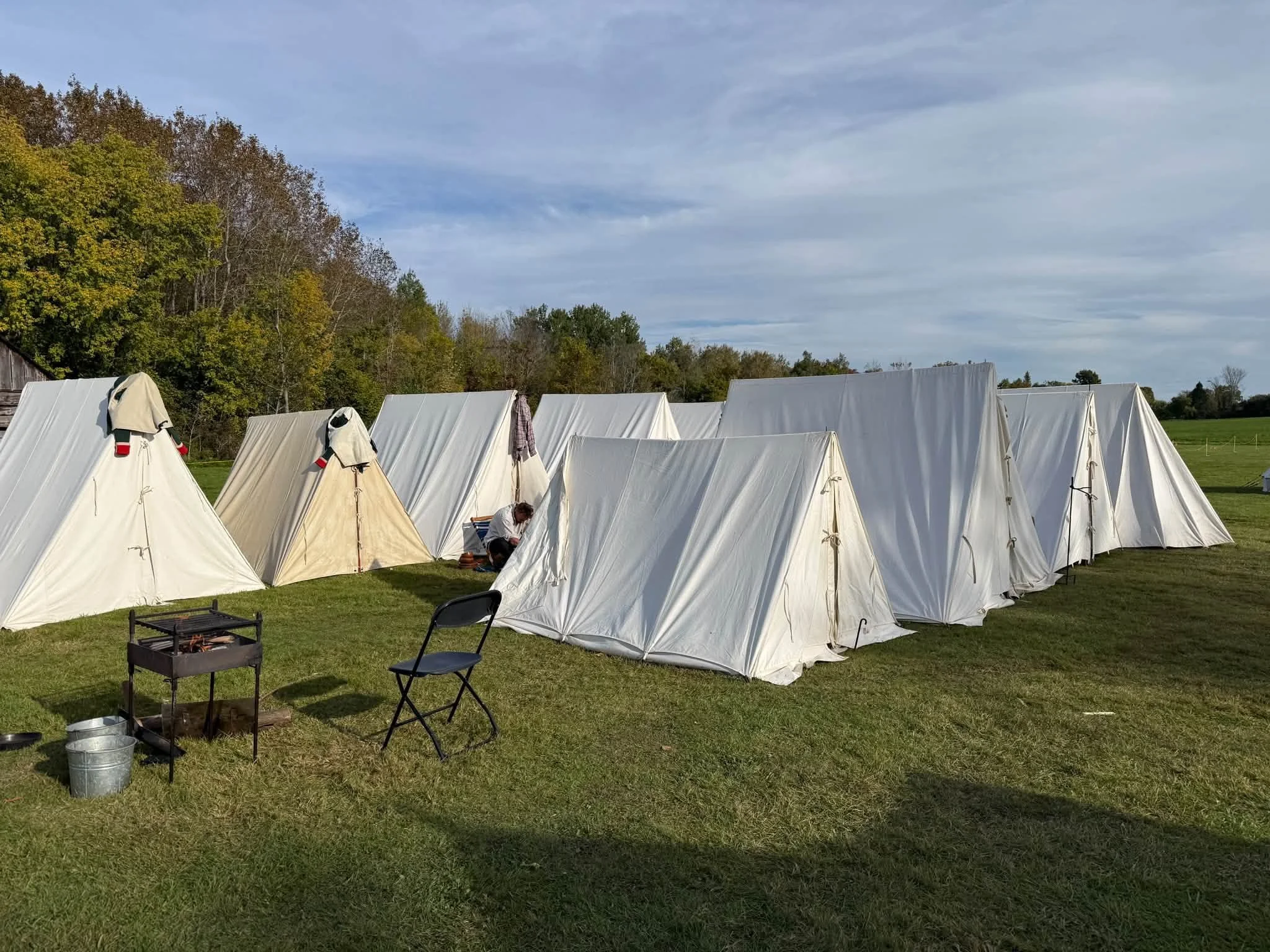
War of 1812 encampment at the Glengarry Pioneer Museum in Dunvegan, Photos Dave Johnston