
Ottawa’s civic origin story began with a Scottish-style Governance Model: The Burgh
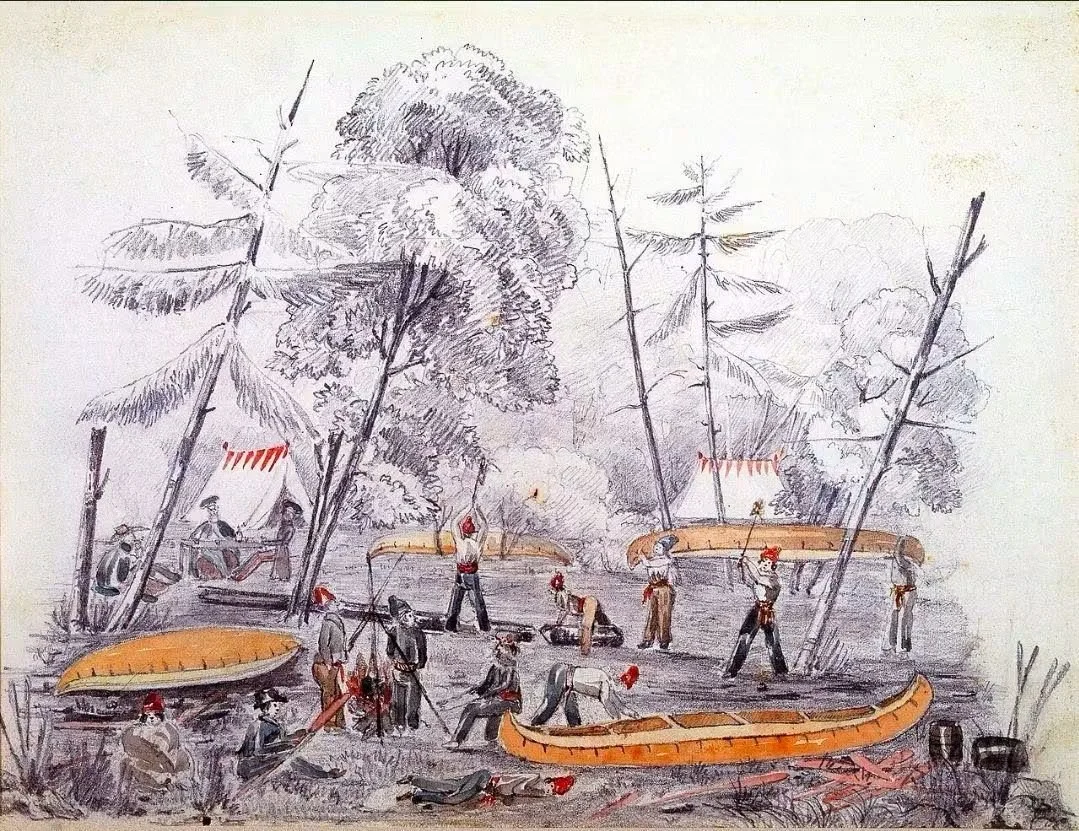
"First camp, Bytown, Canada”, 1826 drawing by Lieutenant Colonel John By, Bytown Museum.
By Jen Hill
In March 1828, Bytown was barely two years old and growing at a remarkable pace.
The Rideau Canal was under construction, drawing thousands of labourers into the area. Houses, shops, taverns and businesses were springing up quickly. Upper Town was taking shape around merchants and officials, while crowded Lower Town was home largely to Irish and French-Canadian canal workers.
Bytown was turning into a real town almost overnight. The problem was that it still didn’t have an elected municipal government of its own. Because the settlement was heavily populated by Scottish immigrants and builders, residents set up a temporary council modeled strictly after something familiar.
At a public meeting in March 1828, they elected a council modelled on a Scottish burgh. A burgh is a historic Scottish autonomous municipal corporation that had self-governance, distinct legal rights, and exclusive trading privileges. First introduced in Scotland in the 12th century under King David I, a burgh helped foster commerce and craftsmanship outside the rigid control of local lords
Rather than choosing a mayor, “Bytowners” selected a Provost, along with bailiffs, a dean of guilds, town clerk, treasurer, surveyor, convenor of trades and councillors. In Scotland , a provost is a chief magistrate and head of a town council.
The man chosen as Provost was James Ferguson, a Scot from Glasgow. The council itself was overwhelmingly Scottish. Among those involved were several familiar names from early Bytown history, including Thomas McKay, John McTaggart, Alexander Christie, George and Robert Lang and William Stewart.
There was just one rather important snag: the colonial authorities didn’t recognize the new government.
Bytown’s home-grown elected council was pushed aside, and the settlement continued to be administered through an appointed magistrate instead.
It would be nearly another 20 years before Bytown finally received a legally recognized elected municipal government. The town was incorporated in 1847, when Brockville-born John Scott became its first official mayor.
So we can certainly say that Ottawa’s civic origin story began with a Scottish-style detour that happened because this fast-growing canal settlement was developing far more quickly than its system of government could keep up.
Not a bad Scottish footnote in the story of Canada’s capital.
Sources:
City of Ottawa Archives, “Bytown: Construction Camp to Fledgling City, Chapter One: Planning and Self Organizing, 1819 to 1838.”
Ottawa Documents
Capital Heritage, “Bytown at Your Fingertips: People.”
Capital Heritage
Heritage Ottawa, Newsletter, Winter 1998.
Heritage Ottawa Shop
Library and Archives Canada,“CityScapes: Ottawa.”